In brief
A fragrance family describes an overall scent direction. Use it to narrow your search, then smell the whole composition. Familiar smells and personal impressions are useful starting points alongside a note list.
A family describes the whole impression
One perfume may feel floral, fruity and woody at the same time. Classification helps describe its dominant character rather than putting every note in a separate box. Different classification systems may also use different terms.
Floral does not automatically mean sweet, and woody does not have to mean heavy. Read the combination of notes and compare it with your own experience of the scent.
Describe preferences in everyday words
Write down three impressions you enjoy: citrus peel, soft flowers or dry wood, for example. Add a direction you dislike, such as excessive sweetness. This is usually easier to discuss than asking for something sophisticated.
Compare those impressions with the opening, heart and base described on a product page. A perfume that combines something familiar with an uncertain note can remain a candidate for sampling.
Explore a neighbouring direction
If you enjoy florals, try one with a woody finish or a fruity opening. Changing one direction at a time can help you notice what attracts you.
Return to the whole scent before deciding. Family names give us a shared vocabulary; wearing and smelling the perfume gives you the personal answer.
Floral and woody floral perfumes
Jasmine, rose, tuberose and orange blossom are familiar references for floral perfumes. A floral composition can feel green, fruity or creamy. Read the full combination before associating a family with a particular strength or occasion.
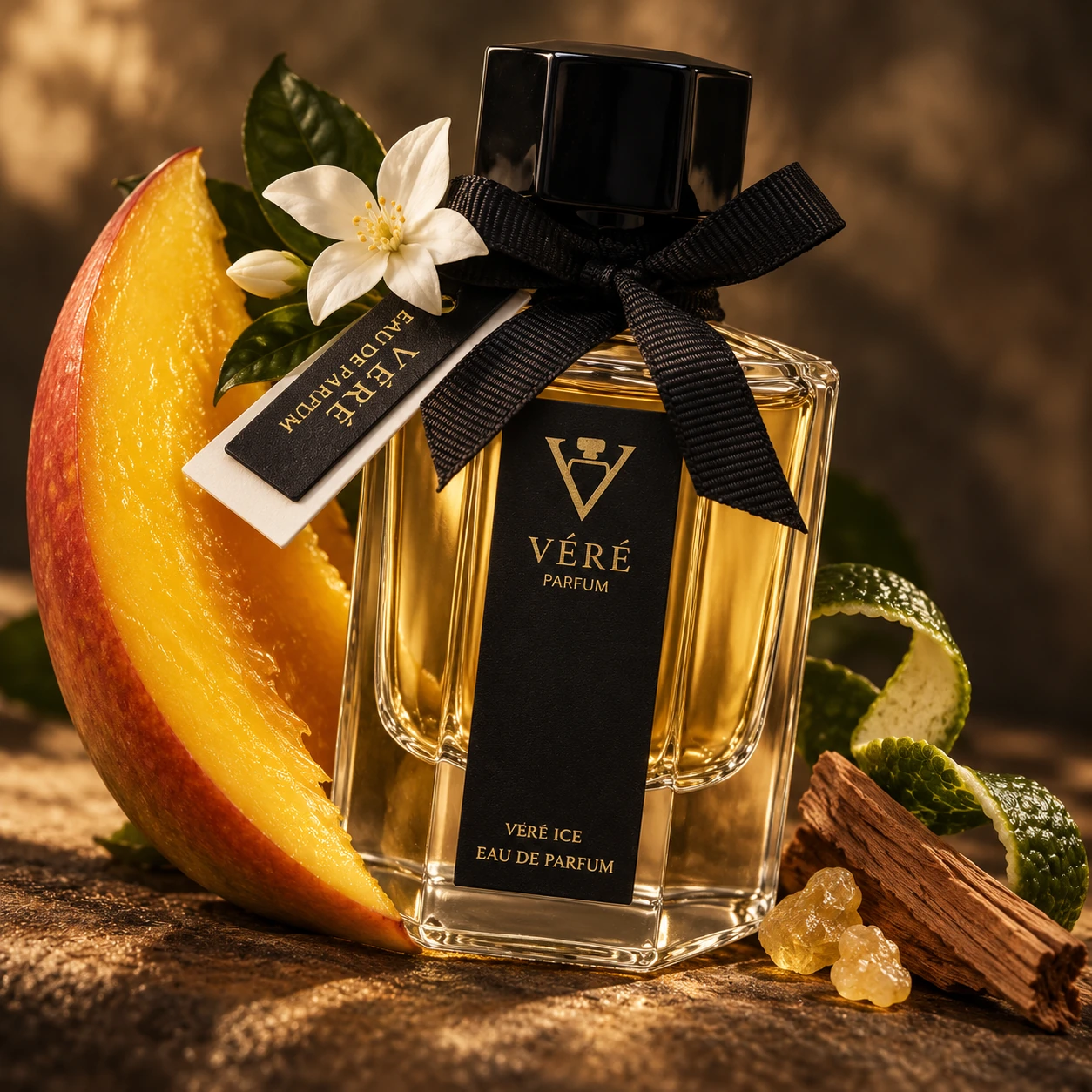
VÉRÉ WOMEN10 brings together jasmine, tuberose and Rangoon creeper. WOMEN11 combines mango and bergamot with jasmine, frankincense, vanilla and sandalwood. Their declared notes offer a starting point for comparing floral and woody floral directions.
Woody perfumes and oud notes
Cedar, sandalwood and oud describe different woody facets. Amber, spice or leather notes may accompany them. A woody label alone does not tell you how long a perfume lasts or how far its scent travels.
UNI01 is presented as oud and warm amber, while UNI02 explores sandalwood and leather. Use these descriptions to shortlist unisex perfumes, then test them to decide which direction you enjoy.
Gourmand perfumes and citrus scents
Gourmand refers to edible associations such as vanilla, coffee or almond. Citrus notes recall fruits such as bergamot, lemon or grapefruit. A composition may bring these facets together; the label alone does not determine sweetness.
WOMEN02 combines coffee with orange blossom over musk, vanilla and patchouli. For a different starting point, MEN02 features grapefruit and cedar. Record which contrast you prefer before choosing by a broad label.
To explore different VÉRÉ fragrance profiles, compare jasmine and tuberose WOMEN10, coffee and orange blossom WOMEN02 and mango and sandalwood WOMEN11. Notes offer a starting point; trying a perfume on your skin helps you decide which scent feels right for you.